

Checkmate your opponent to win!
Chess Online with Friends
Chess is probably one of the most well-known board games in the world. Its history dates back to the 3rd century and originates from Asia - specifically from India, Persia, and China.
Today it is played by millions of people worldwide. It is a game of strategy and tactics, where each player tries to checkmate their opponent.
Here you can play Chess online for free as a 2-player game in multiplayer mode with your friends. Create a room now or join an existing game - all without sign up. Have fun!


How to Play Chess?
In Chess, two players play against each other. Each player has 16 pieces that are placed on the chessboard. They are colored either black or white. The players take turns moving their pieces on the board. The goal of the game is to checkmate the opponent.
Before we continue, we should first clarify the two most important terms in Chess:
- Check: The king is directly attacked. The player must protect the king, for example by moving their own king away. Alternatively by blocking or capturing the attacking piece.
- Checkmate: The king is in check and can no longer be saved. This ends the game. The player who is checkmated has lost.
Chessboard Setup
The chessboard is an 8×8 field. The total of 64 squares are alternately colored, creating the so-called "checkerboard pattern."
At the start, there are 32 pieces on the board. Each player has 16 pieces, colored black or white respectively.
On the first and last rank, the main pieces (King, Queen, Rook, Bishop, and Knight) are placed in the starting position. The pawns are placed protectively in front of them.
The following image shows the chessboard in its starting position:
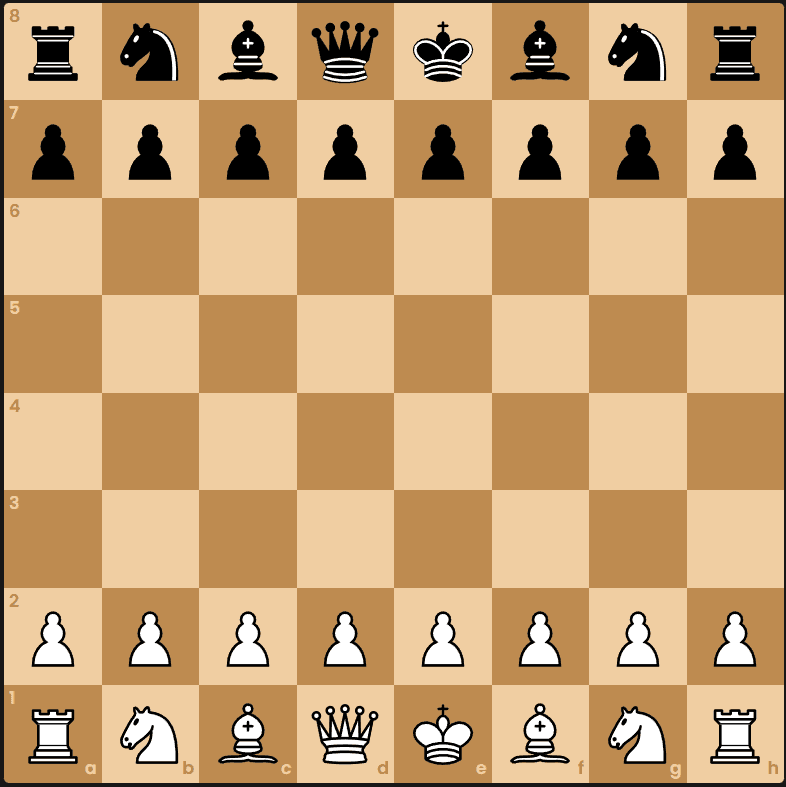
The white player starts the game with the first move of one of their white pieces. How exactly they may move their pieces is described in the following sections.
Chess Pieces
There are 6 different chess pieces in total. Each has its own movement pattern and rules, which will now be introduced.
Pawn
The pawn is the simplest chess piece. Each player has 8 pawns at the start of the game. From their starting rank, they may move two squares forward. After the first move, they may only be moved one square forward.
"Capturing a piece" in Chess means that one of your pieces moves to a square that is currently occupied by an opponent's piece. The opponent's piece is thereby removed from the board.
The pawn can only move forward. It cannot move backward. It only moves diagonally to capture another piece.
Bishop
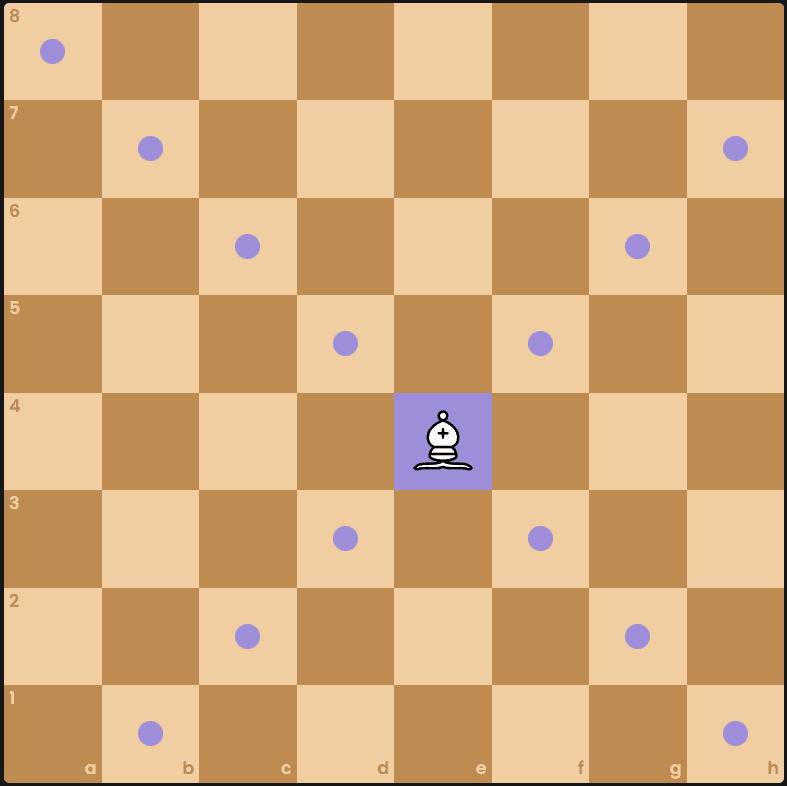
Each player has two bishops. One stands on a black square, the other on a white square. They can move diagonally over any number of squares, as long as no own or opponent's pieces are in the way.
Knight
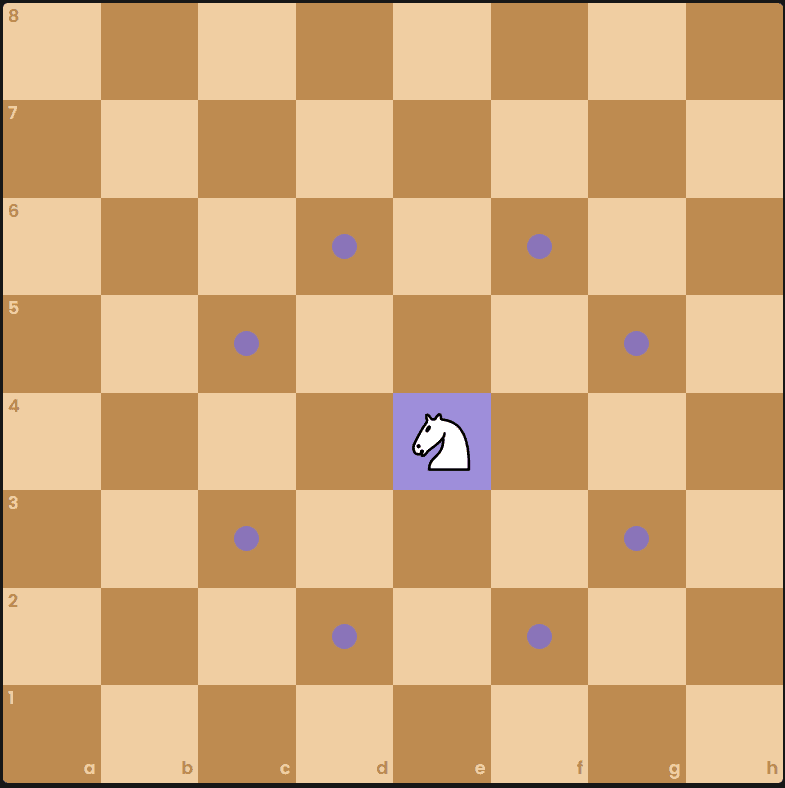
The knight is also represented twice on each side. It is the only piece that can jump over other pieces. The movement pattern corresponds to an "L". It moves two squares in one direction and then one square to the side.
Rook
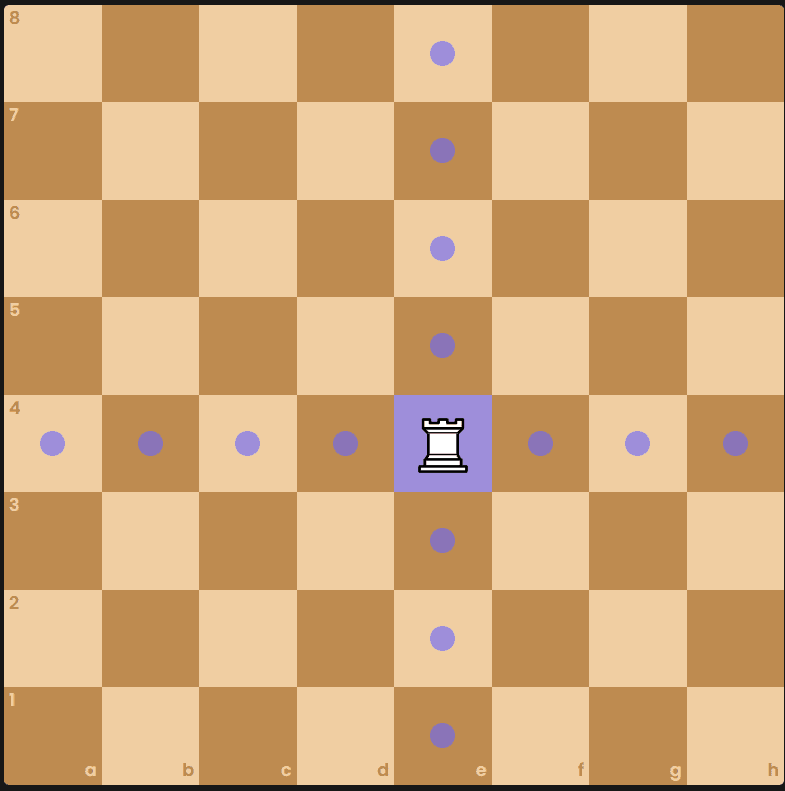
The rook can move horizontally or vertically over any number of squares, as long as no own or opponent's pieces are in the way.
Queen
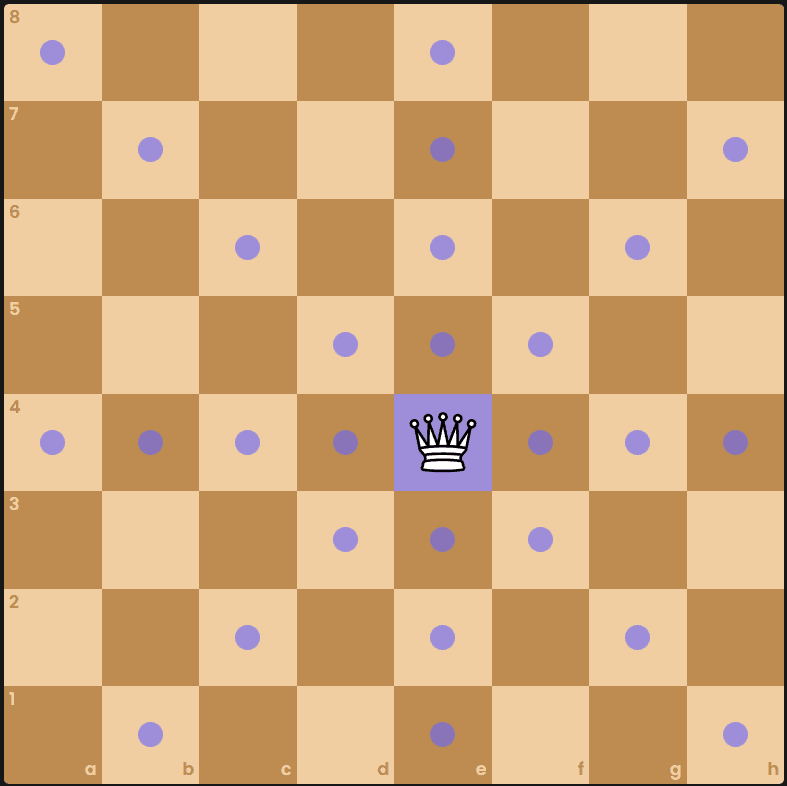
The queen is the strongest chess piece. It combines the movement of the bishop and the rook. It can move diagonally, horizontally, and vertically over any number of squares, as long as no own or opponent's pieces are in the way.
King
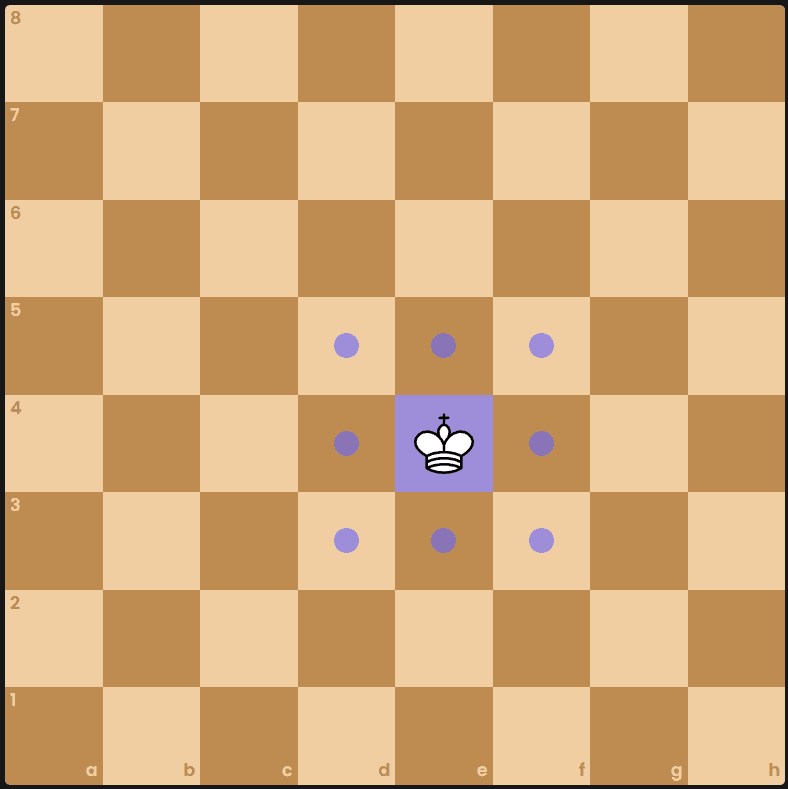
The king is the most important chess piece in the game. It must be checkmated or protected. However, it is not particularly mobile and may only move one square in any direction per move.
Piece values
As you have learned, chess pieces have different strengths. The strength of a piece is determined by its value, which is shown in the following table:
| Piece | Value |
|---|---|
| Pawn | 1 point |
| Knight | 3 points |
| Bishop | 3 points |
| Rook | 5 points |
| Queen | 9 points |
| King | Infinite |
Although the total points you get from capturing pieces doesn't change the course of the game, it can help you assess which pieces you should pay particular attention to.
Special Rules
In addition to the movement rules of the individual pieces, there are a few more rules you must observe.
Castling
Castling describes a type of move where the king and the rook are moved simultaneously. The king is moved two squares toward the rook. The rook jumps over the king and lands directly next to it. This can be done on the kingside (short castling) and on the queenside (long castling).
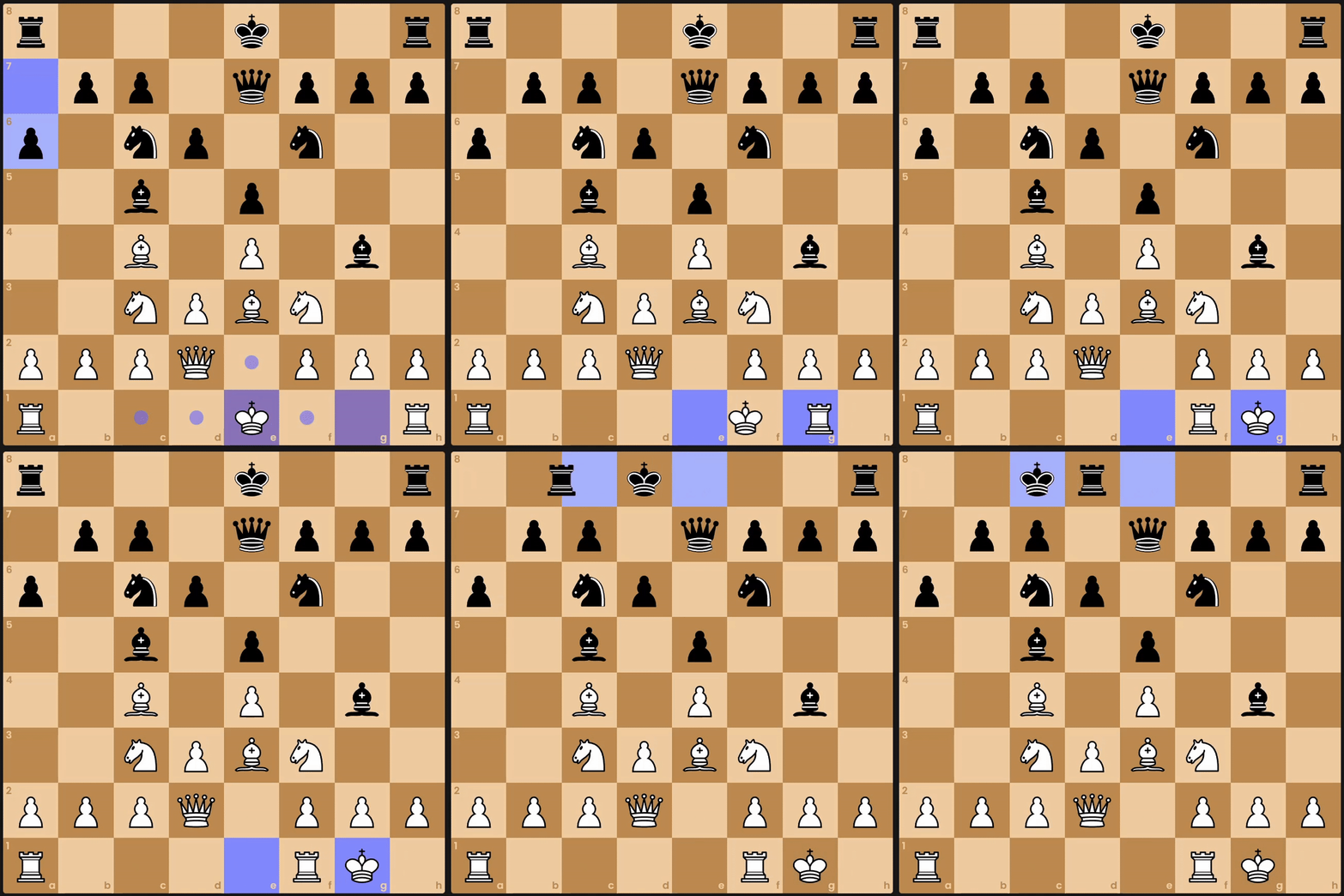
Castling is particularly good for protecting the king from attacks. It is especially effective when the king's own pawns are still in front of it. However, there are a few conditions that must be met for castling to be possible:
- Neither the king nor the rook may have moved before.
- There may be no pieces between them.
- The king may not be in check, may not cross a square that is attacked, and may not land in check.
Pawn Promotion
When a pawn reaches the opponent's back rank, it can be promoted to any piece (except a pawn or king). Thus, there can be multiple queens of the same color on the board, for example.
En Passant
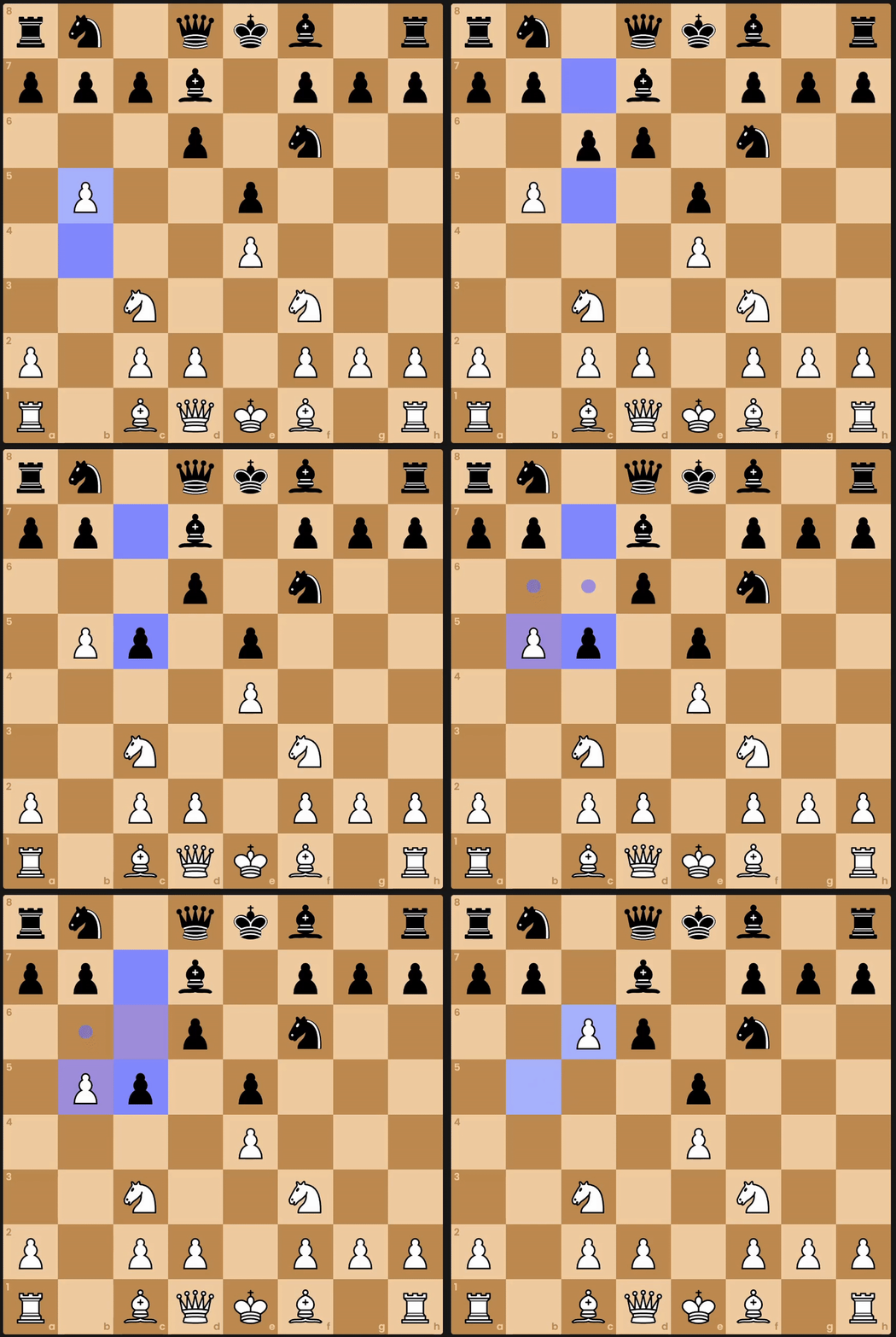
En Passant is a special capture rule for pawns. When a pawn moves two squares forward and passes an opponent's pawn, that pawn may capture it "in passing" on the next move - as if the pawn had only moved one square. This capture is only allowed directly on the following move.
Stalemate
There are various ways a chess game can end in a draw. One of them is stalemate. It occurs when a player has no legal move left, but their king is not in check.
In addition to stalemate, there are other rules by which a game can end in a draw. For example, through a threefold repetition or when no piece has been captured and no pawn has been moved over many moves.
Basic Strategies
There are probably hundreds of strategies for a successful chess game. Here are four basic strategies that every chess player should know.
1. Protect your king
The king is the most important piece in Chess. It must therefore be particularly protected. You should quickly bring it to safety. For this, you can use castling, for example.
2. Don't give away pieces
Every piece has its value, and whoever loses them carelessly quickly falls behind. Make sure not to give away pieces without compensation. So only exchange pieces when it gives you an advantage. Consider with each move whether your pieces are protected and whether the opponent could set a trap to capture them.
3. Control the center
Whoever controls the center can use their pieces better and often leaves the opponent with fewer good squares. So: develop pawns and pieces so that they have influence on the center.
4. Develop your pieces
At the beginning of the game, it is crucial to bring your pieces out of their starting positions. Actively place knights and bishops before attacking with the queen or rooks. A player with well-developed pieces can respond to threats and create opportunities themselves.
Questions and Answers
Challenge a friend now and play Chess online.